
Somewhere in the cloud, a counter is ticking. Every API call you make, every search, every lookup, every enrichment, adds a fraction of a cent to someone's bill. Welcome to the microtransaction API economy, where software is sold by the sip instead of the bottle.
Why metered pricing won
The logic is seductive. Traditional SaaS charges a flat monthly fee, which means light users overpay and heavy users underpay. Metered pricing aligns cost with value: use little, pay little; use a lot, pay proportionally. For API providers, it also removes the ceiling, a customer's bill can grow without bound as their usage grows.
Stripe's metered billing, AWS's pay-per-request model, and a thousand API-first startups have normalized the idea. Developers expect it now. "What's your per-call price?" is often the first question, not an afterthought.
Metered pricing aligns cost with value, until the meter starts running faster than anyone expected.
The psychology of the ticking meter
Enjoying this story?
Get the five most important stories in tech, every morning. Free.
But there's a dark side, and it's psychological. A flat subscription is predictable; you pay it and forget it. A metered bill is a source of ambient anxiety. Every integration decision becomes a cost decision. Developers start caching aggressively, batching requests, building workarounds, not because the price is unfair, but because the uncertainty is uncomfortable.
The horror stories are legion: the runaway script that racks up a five-figure bill overnight, the retry loop that multiplies costs 10x, the "free tier" that ends mid-month without warning. Each one erodes trust in the model.
Where it works
Metered pricing works best when three conditions hold. First, unit economics are transparent, the customer can predict costs from their own usage patterns. Second, costs scale with customer value, each API call should correspond to something the customer cares about, not an implementation detail. Third, guardrails exist, spending caps, alerts, and kill switches that prevent the horror stories.
The best API businesses treat pricing as a product feature. Clear dashboards, predictable tiers, generous free allowances for development. The meter should feel like a fair exchange, not a trap.
Where it breaks
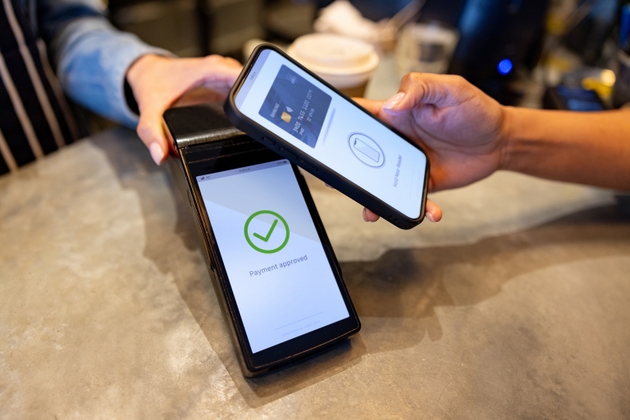
It breaks when the provider's costs and the customer's value diverge. If your API does expensive work per call but the customer's value per call is low, no price satisfies both sides. It breaks when usage is spiky and unpredictable, nobody wants a bill that's 10x higher this month for reasons they can't explain. And it breaks at the extremes: below a cent per call, the accounting overhead can exceed the revenue.
Below a cent per call, the accounting overhead can exceed the revenue. The meter costs more than what it measures.
The hybrid future
The market is converging on hybrids: a base subscription that includes a generous usage allowance, with metered overages beyond it. This gives customers predictability for the common case and providers upside for the heavy case. It's less elegant than pure metering, but it matches how humans actually think about money.
The microtransaction API economy isn't going away, the alignment between usage and price is too powerful. But the winners will be the providers who remember that behind every API call is a developer doing mental math, and who make that math easy, predictable, and fair.
Pricing as a moat
Here's something rarely discussed: pricing structure itself can be a competitive moat. When developers build their cost models around your per-call price, switching providers means reworking budgets, alerts, and architectural assumptions. The meter creates stickiness that flat pricing doesn't.
Smart API companies exploit this deliberately. They make the first million calls cheap, cheap enough that building on their platform feels free, knowing that by the time usage scales, the customer's infrastructure is entangled with their pricing model. It's the enterprise sales playbook, adapted for developers: land with generosity, expand with inevitability.
Whether that's fair is debatable. What's not debatable is that it works. If you're evaluating API providers, model your costs at 10x current usage before committing. The price that looks generous at small scale can look very different when you're successful, which is exactly when you can least afford to switch.
360 Comments