
Every few months, the AI industry announces a bigger model. More parameters, more GPUs, more money. The press releases read like a space race. But if you talk to the engineers actually shipping products, a different story emerges: the most interesting work right now is happening at the other end of the scale curve.
Small models, systems with a few hundred million to a few billion parameters, are quietly getting good enough to do real work. Not demo work. Real work: drafting, coding assistance, document analysis, customer support. The kind of tasks that previously required a call to a massive API.
The efficiency frontier
The math is hard to argue with. A frontier-scale model costs dollars per million tokens to run. A well-built small model costs fractions of a cent, or nothing at all, if it runs on the user's own device. For high-volume applications, that difference isn't marginal. It's the difference between a viable product and a science project.
Three techniques are doing most of the heavy lifting. Quantization shrinks models by reducing numerical precision, often with barely measurable quality loss. Distillation trains small models to imitate large ones, transferring capability without the bulk. And better training data, carefully curated, deduplicated, instruction-tuned, turns out to matter more than raw parameter count for most practical tasks.
The question is no longer "how big can we build it?" but "how small can we make it before it breaks?"
The result is a growing class of models that punch far above their weight. A 3-billion-parameter model today outperforms a 175-billion-parameter model from three years ago on many benchmarks. That isn't a small improvement. It's a phase change in what's deployable.
Why on-device matters
Enjoying this story?
Get the five most important stories in tech, every morning. Free.
Running models locally changes the product calculus in ways that go beyond cost. Latency drops to near zero, no network round trip. Privacy becomes a feature instead of a compliance burden, because user data never leaves the device. And offline capability stops being a nice-to-have.
For developers, this is liberating. You can build AI features without an API key, without usage-based pricing anxiety, and without worrying that your provider will deprecate the model your product depends on. The model is a file. It ships with your app.
What the giants are missing
None of this means large models are going away. The frontier labs still produce the best raw reasoning, and distillation depends on having excellent teachers. The relationship is symbiotic: big models explore what's possible, small models productize it.
But the economic center of gravity is shifting. When inference costs approach zero, entirely new product categories become viable, ambient assistants, real-time translation, on-device agents that work in airplane mode. The constraint moves from "can the model do it?" to "can we afford to run it a billion times?" Small models answer yes.
When inference costs approach zero, entirely new product categories become viable.
The road ahead
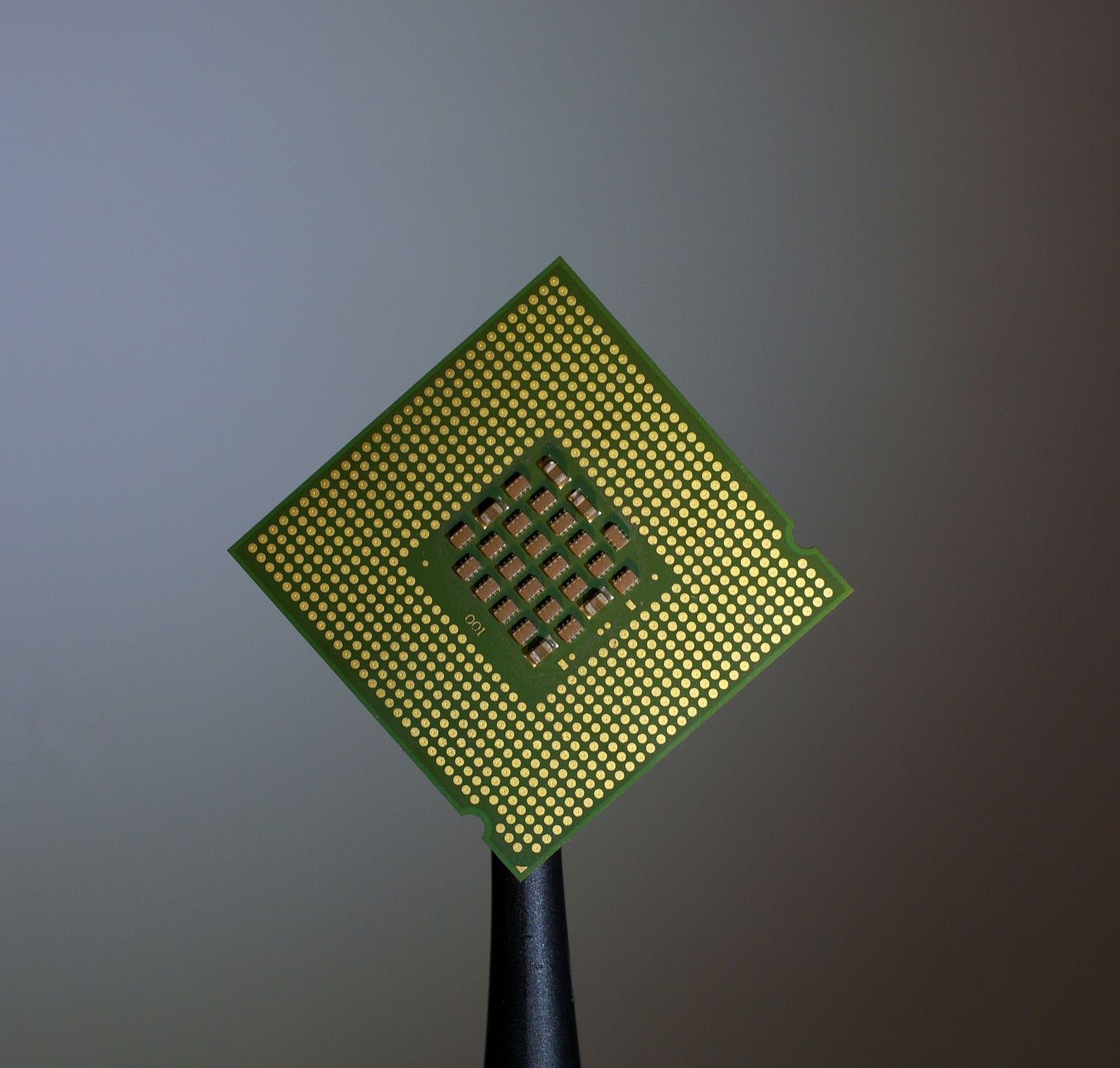
The next frontier for small models isn't just size: it's architecture. Researchers are exploring mixture-of-experts designs that activate only a fraction of parameters per token, state-space models that handle long contexts cheaply, and hybrid approaches that route easy queries to tiny models and hard ones to larger ones.
The pattern is familiar from computing history. Mainframes gave way to minicomputers, which gave way to PCs, which gave way to phones. Each transition was driven by the same force: capability getting cheap enough to be everywhere. AI is following the same arc. The revolution won't be centralized. It'll fit in your pocket.
The tooling gap is closing
Two years ago, running a small model locally meant wrestling with Python environments, CUDA versions, and quantization scripts. Today the tooling has matured dramatically. Projects like llama.cpp made efficient CPU inference practical; Ollama wrapped it in a one-command experience; and hardware vendors now ship NPUs in consumer laptops specifically designed for local model execution.
This matters more than it looks. Developer experience determines adoption. When running a capable model locally is as easy as npm install, experimentation explodes, and experimentation is where new product categories are born. The current wave of on-device AI features in shipping apps traces directly to this tooling maturity, not to any single model release.
The remaining gap is evaluation. Teams choosing between small models need rigorous, task-specific benchmarks, not leaderboard scores. The organizations doing this well maintain private eval suites built from their own production data, and they re-run them against every candidate model. It's unglamorous work, but it's the difference between a demo that impresses and a deployment that lasts.
225 Comments