
In a pond in Germany, a single-celled alga swims toward light using a trick no animal possesses: proteins in its membrane that open when struck by photons, letting ions flood in. It is a humble survival mechanism. It also turned out to be the key to controlling the brain with light.
On October 5, the Nobel Prize in Physiology or Medicine went to Karl Deisseroth of Stanford, Peter Hegemann of Berlin, and Georg Nagel of Wurzburg for optogenetics, the technique that uses those algal proteins to switch individual neurons on and off with flashes of blue light. It has revolutionized neuroscience. And it is opening therapeutic paths for blindness, Parkinson's, and depression.
The algae discovery
The story starts with basic curiosity. In the early 2000s, Hegemann and Nagel were studying channelrhodopsins, light-gated ion channels from green algae. These proteins sit in the cell membrane and snap open when hit with blue light, allowing charged ions to rush through. In the alga, this generates the electrical signal for swimming toward light.
Hegemann and Nagel characterized these channels in detail, showing they worked as precise, light-operated switches. It was beautiful biology. Nobody yet knew it would become a tool.
Flash blue light on a single brain cell and watch it fire. Pond algae gave neuroscience its most precise tool.
Lighting up the brain
Enjoying this story?
Get the five most important stories in tech, every morning. Free.
The leap came from Karl Deisseroth, a psychiatrist and bioengineer at Stanford who was frustrated by the bluntness of existing neuroscience tools. Drugs affect the whole brain. Electrodes stimulate everything nearby. What he wanted was a way to control specific neurons, in specific brain regions, at specific moments.
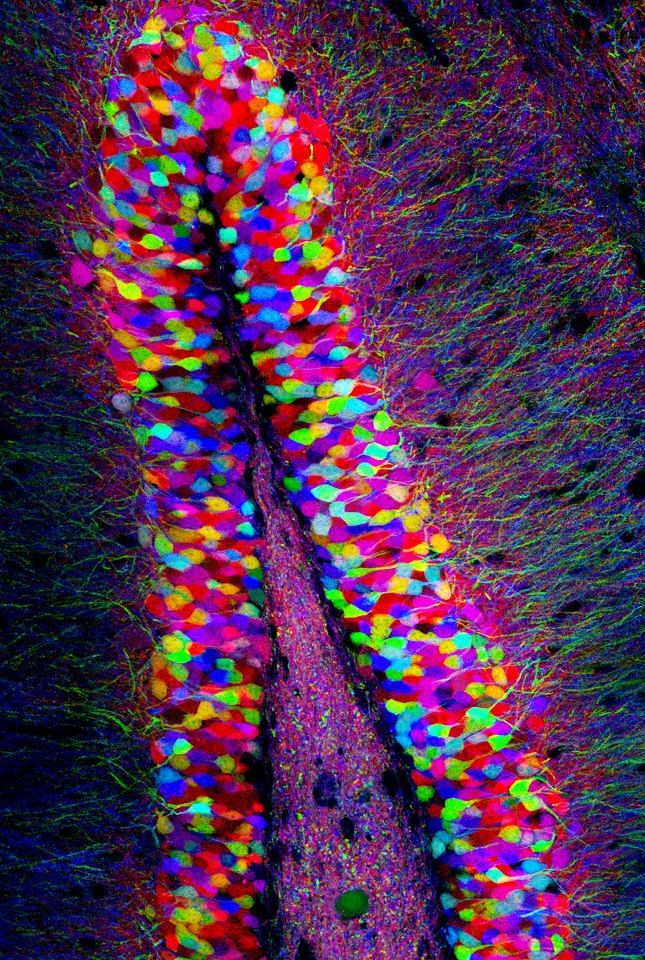
Working with the channelrhodopsins Hegemann and Nagel had characterized, Deisseroth's team inserted the algal genes into mouse neurons, then threaded thin optical fibers into the brain. Flash blue light, and the targeted neurons fire. Turn it off, and they stop. For the first time, scientists could reach into a living brain and flip individual circuits like light switches, with millisecond precision.
What optogenetics revealed
Optogenetics: From Pond Algae to Nobel Prize
How a humble alga gave scientists a remote control for the brain.
Note: For illustrative purposes only.
The technique spread through neuroscience like wildfire. Researchers used it to map the circuits behind fear, reward, sleep, appetite, and memory. They could activate the neurons encoding a specific memory and watch an animal re-experience it. They found the precise brain circuits whose malfunction produces depression-like states, and showed that stimulating them could reverse the symptoms.
Entire subfields were born. Before optogenetics, neuroscientists mostly correlated brain activity with behavior. Afterward, they could establish causation: turn this circuit on and the behavior appears, turn it off and it vanishes.
Toward therapies
The medical promise is still unfolding, but the early results are striking. Optogenetic approaches are in clinical testing for restoring vision: introducing light-sensitive proteins into surviving retinal cells, then using special goggles to stimulate them, has partially restored sight in patients with degenerative blindness.
Researchers are exploring optogenetic treatments for Parkinson's disease, epilepsy, and chronic pain, all conditions where precise control of neural circuits could outperform drugs. The challenges are real: getting light into deep brain tissue, delivering genes safely, making the effects last. But the trajectory is unmistakable. Three scientists followed their curiosity from pond algae to the control panel of the brain, and medicine may never be the same.
210 Comments