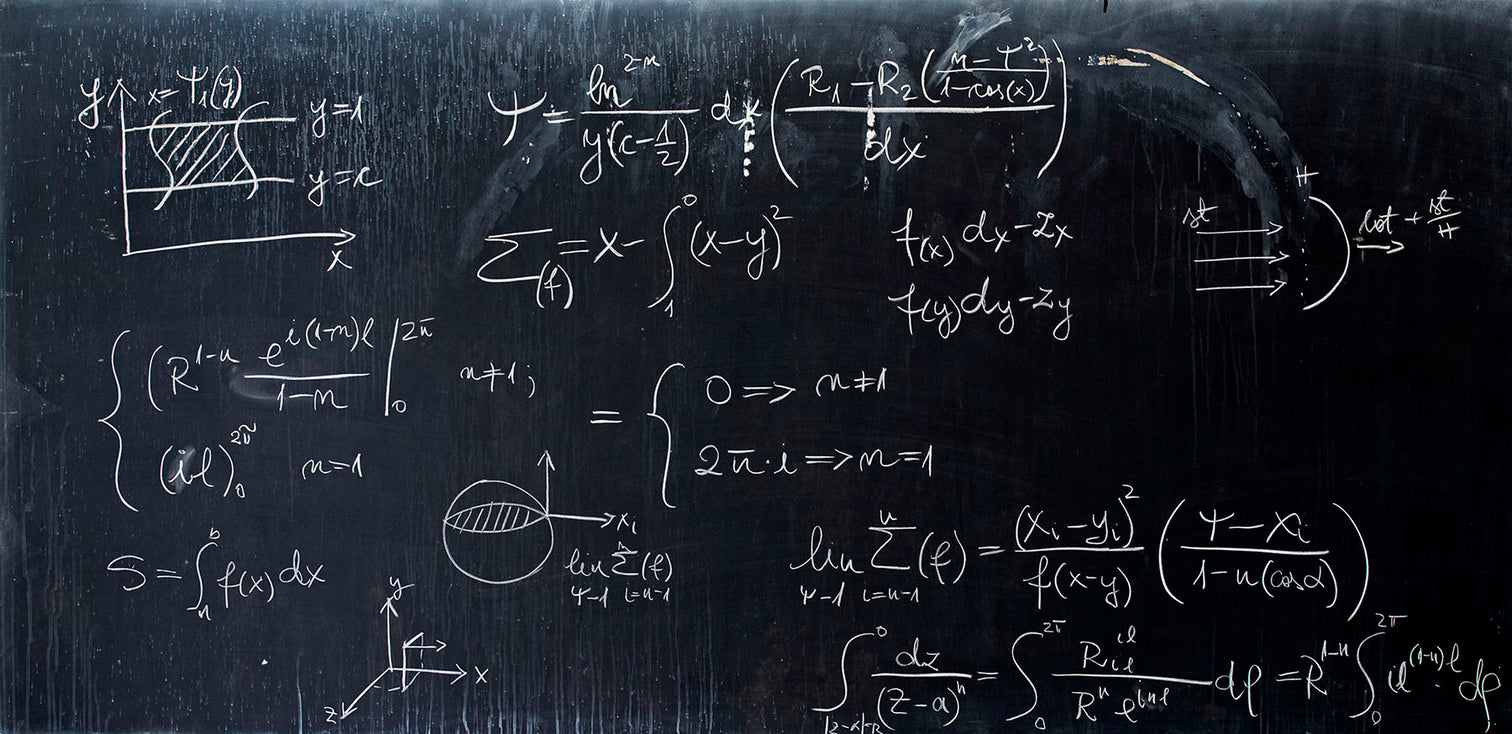
On the evening of October 6, OpenAI did something no AI lab has ever attempted: it published 722 mathematical manuscripts in a single GitHub repository, all generated by an unreleased internal model, covering 372 families of previously unsolved research problems. The company claims the haul includes a solution to the four-dimensional Kakeya conjecture, a new zero-free region for the Riemann zeta function, and a proof of the Hodge conjecture for CM abelian varieties.
The mathematics world split within hours. Some researchers called it the most significant AI-for-science result ever published. Others, including 25 medalists who had already signed a statement in September warning about AI misalignment in mathematics, pushed back hard on the framing. Nobody, as of this writing, has publicly confirmed a single proof correct or shown one wrong.
What was actually released
The repository, openai/math, is enormous and unusually transparent. Each of the 722 manuscripts is grouped into 372 "families," a principal result plus companions, consequences, or alternative proofs. Many come with formalizations in Lean, a proof-checking language that lets a computer verify the logic independently of human review. Ten abridged reasoning summaries show the model's step-by-step thinking on selected problems.
OpenAI says the vast majority came from a single fixed procedure: roughly 4,000 open problems were posed to the model, and each successful result consumed compute equivalent to about three hours of ChatGPT Pro thinking. The company consulted an independent advisory group of mathematicians at the Institute for Advanced Study about how to release the work responsibly, and the README warns frankly that unformalized results may contain errors.
As of this writing, nobody has publicly confirmed a single proof correct or shown one wrong. The manuscripts now have to survive the thing that matters most: mathematics.
Why mathematicians are uneasy
Enjoying this story?
Get the five most important stories in tech, every morning. Free.
The pushback isn't really about whether the proofs check out. It's about what counts as mathematics. A proof verified by Lean is logically valid, but mathematicians argue that the discipline is also about understanding: the new ideas, the connections, the intuition that lets humans build on a result. A 199-page machine proof of a quasi-Riemann hypothesis, however correct, doesn't obviously advance human comprehension.
There's also a priority and credit problem. If an AI system can generate hundreds of publishable results overnight, what happens to the graduate student spending three years on one theorem? The September statement signed by 25 medalists framed this as a misalignment problem: AI systems optimizing for "results produced" may flood the literature faster than humans can absorb it, degrading the signal that peer review and reputation are supposed to provide.
What it means beyond math
The 722-Manuscript Drop, by the Numbers
What OpenAI published on October 6, 2026.
Compute measured in ChatGPT Pro thinking equivalents. Note: For illustrative purposes only.
Strip away the controversy and the workflow is the real story. The model moved through a sequence that used to belong entirely to human researchers: identify a problem, explore approaches, produce a candidate result, write it up, formalize parts of it, submit for scrutiny. That is qualitatively different from winning a math olympiad. It is the automation of research itself.
If this workflow keeps improving, mathematics is just the first field. Any discipline where progress looks like "pose problem, attempt solution, verify result" is now in the blast radius: theoretical physics, drug discovery, materials science, chip design. The manuscripts will take months for humans to assess. The precedent they set will take years to digest.
388 Comments